What the farm needs and my solution
Heat detection is the first priority. It is difficult to know when animals are in heat or should be, and on a dairy this size it is the problem that costs the most. Missing an animal's heat means wasting feed on unproductive animals, and missing the chance to keep the best animals in the herd.
Another new burden is an annual report covering every treatment given to every animal. Entering the data is tedious, the notes it comes from are unorganized, and the time spent assembling the report goes to something that serves an outside review rather than the farm.
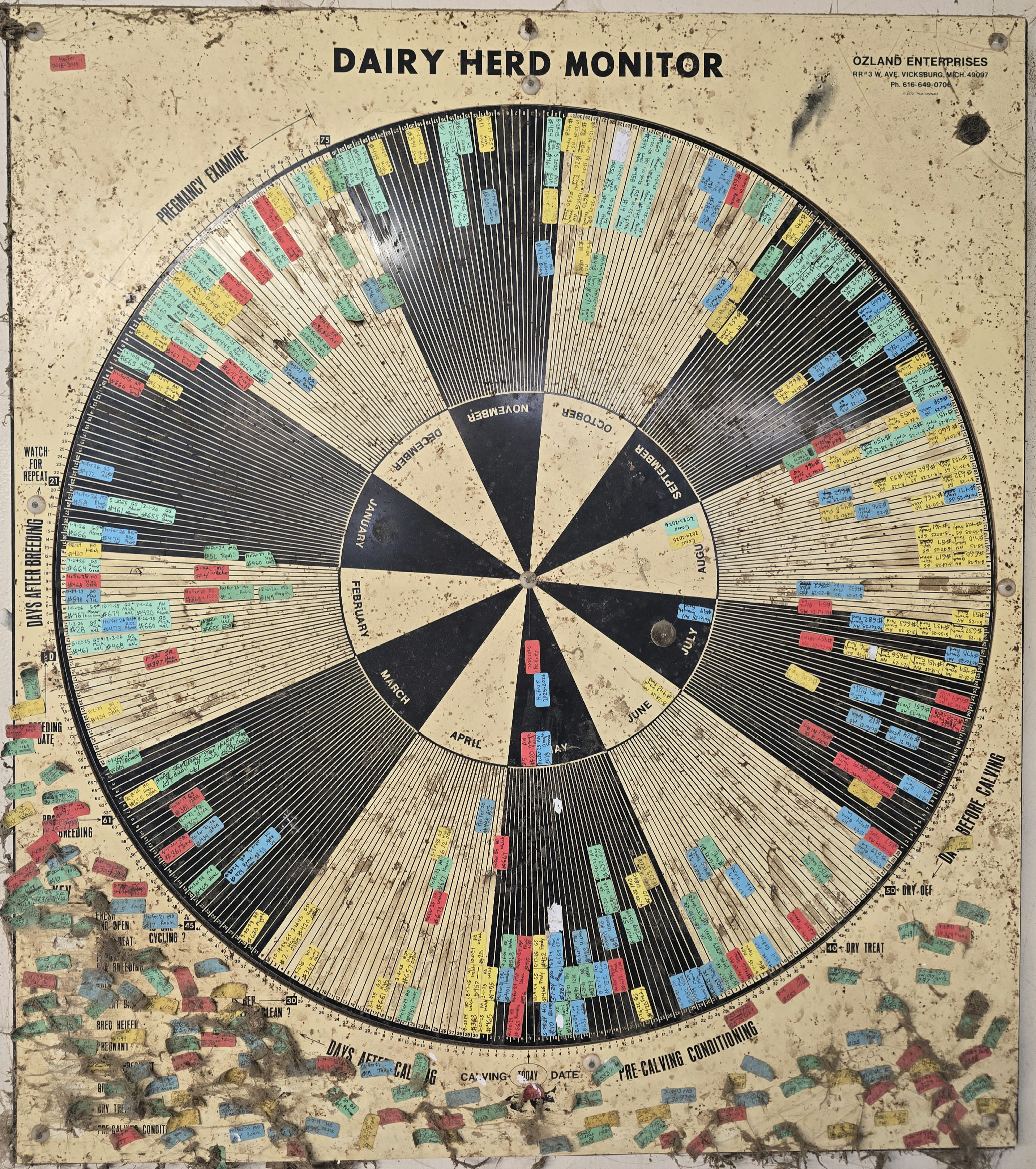
This leads me toward a digital record system, which can replace the existing sticker-on-a-calendar method and the photographs with a number and birth date written on the back. Having all the information in one place would allow for animal-specific notes, automated alerts, and exportable reports in a consistent format. farmOS seems like a reasonable solution, and its module system will let me build on top of it for whatever I need, like a heat detection system.
The heat detection will require hardware on top of that. An animal moves differently when she is coming into heat, so the plan is placing activity beacons on nylon leg bands, with a handful of small radios mounted down the length of the barn listening for them and passing what they hear back to the server. The alert comes out of the data instead of out of someone noticing. Similar technologies already exist, but the data is locked behind subscriptions, proprietary software, and expensive collars that the entire herd would need. My solution requires minimal sensors, can easily be moved between animals as needed, and is much more affordable. Exactly what a small farm needs.
Since that network has to exist anyway, it also gives me a chance to try something new, which admittedly will probably not work, and is not a priority for the farm since there is limited use for the extra data at this scale. I can use the same setup to estimate how much milk each cow produces without measuring any of it directly, using sensors and algorithms instead of meters. As far as I know that would be the first of its kind. It's only a matter of building and testing how close to reality it gets.